The asset is at the ship.
Whoever signs, pays and answers keeps the evidence in hand.
Hull, machinery, cargo and catch sit far from whoever decides the claim, approves the dry dock invoice and answers for the risk. When damage appears, the argument becomes about when and where it happened, and the loose photo in the agent's WhatsApp does not hold up. uInspect puts the adjuster in front of the evidence on the same day and runs every inspection through a single track, from request to auditable report, with photos born with GPS, date and time recorded at the source.
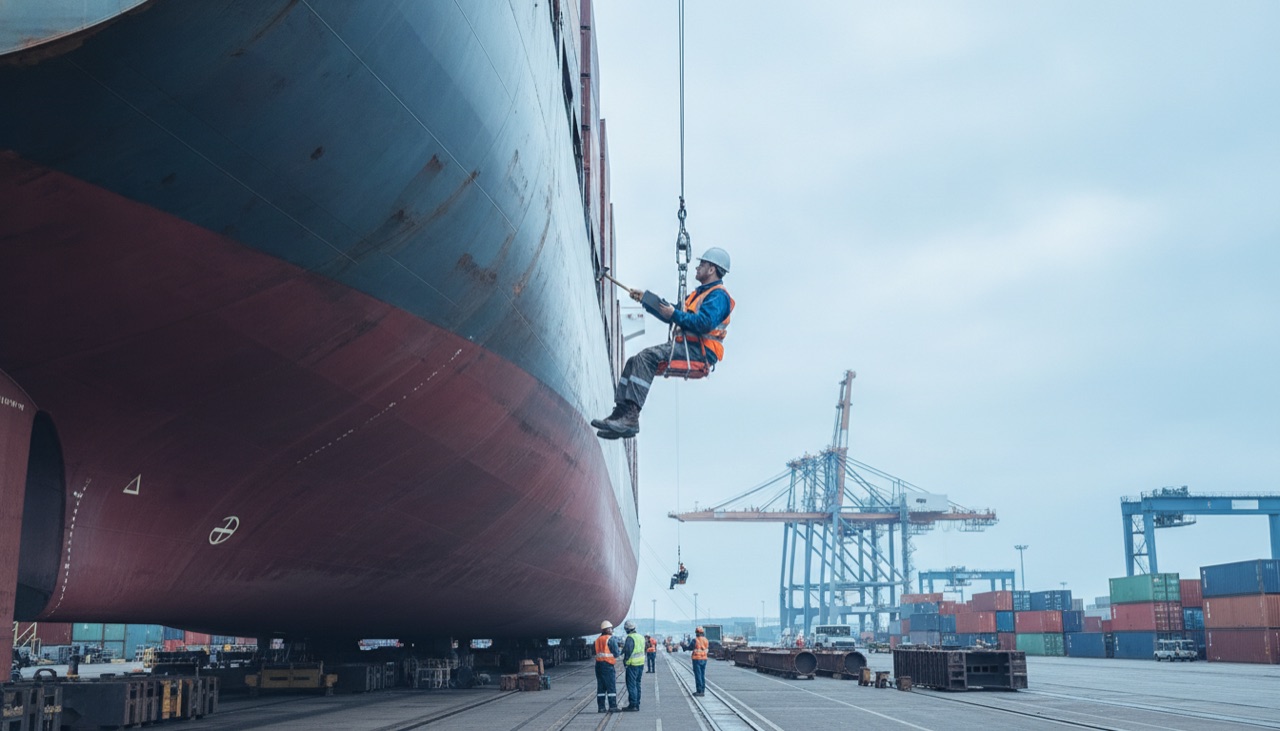
The gate sits far from whoever signs. And today it is signed on trust.
The surveyor travels, photographs with their own camera and sends the report in Word weeks later, when the evidence has already changed.
The photos arrive without GPS and without a reliable time, and there is no way to tie the image to the port, the moment or the device.
Docking acceptance runs on the shipyard's spreadsheet and the foreman's WhatsApp photos, and the superintendent signs in the dark.
At the quay, the landing is recorded in a handwritten logbook, paper tickets and photos with no time or coordinates.
From the hull to the report, everything runs through uInspect
The damage notice enters the track, and the adjuster can enter the evidence by live video on the same day. The inspection happens on board, in the dry dock or at the quay, and out comes an auditable report, with photos at the port's coordinates and the moment.
From request to auditable report.
- 1 The request enters the track, and the adjuster can enter the evidence by live video on the same day, without waiting for the surveyor's trip.
- 2 Capture is born with logged provenance: photo, video and audio through the camera, with GPS, date and time recorded on the image, before the cargo is moved or the water drains away.
- 3 In the dry dock, on board and at the quay, offline on-site inspection records the docking acceptance and the lot's origin in the act, even without signal, syncing while preserving the original GPS and time of capture.
- 4 The auditable report goes out on completion, with a chain of custody from capture to file, backing the adjusting, the invoice and the certification.
The capabilities that turn the inspection into evidence.
The same horizontal platform, with the features this industry actually uses. Everything inside the inspection, not in spreadsheets and scattered chats.
The adjuster enters the evidence by live video on the same day, before the cargo is moved or the water drains away
Photos born with GPS, date and time recorded at the source, tied to the port and the moment of the damage
Inspection on board, in the dry dock and at the quay without depending on signal, with a sync that preserves the original time of capture
Docking acceptance recorded item by item, so the shipyard's invoice is paid with evidence and not with WhatsApp photos
The catch lot's origin captured in the act of landing, not reconstructed in a rush when the audit arrives
An auditable report with a chain of custody from capture to file, still traceable when the hull opens up again years later
Concrete use cases in this industry.
Remote inspection of maritime damage and claims, with the adjuster entering the evidence on the same day as the notice
Docking and repair acceptance at the shipyard recorded item by item, so the dry dock invoice is paid with evidence
Class surveys of hull and machinery, with the condition of each item proven before the certificate renewal
Catch origin records at landing, for chain of custody certification and access to the export market
Vessel delivery and redelivery inspection under charter, with on-hire and off-hire condition recorded for damage and bunker claims
Damage surveys, P&I, class rules and catch certification
A damage dispute is always about time and place: did the damage occur before loading, in transit or at discharge? The counterparty exploits exactly that gap. Without evidence of moment and place, the indemnity slips away and the catch lot stalls at the chain of custody certification the export market demands.
The inspection that holds up, side by side with today's.
- A surveyor who arrives weeks later
- Photos without GPS or a reliable time
- Docking acceptance signed in the dark
- Lot origin reconstructed at the audit
- The adjuster enters the evidence on the same day
- Photos with GPS, date and time at the source
- Docking acceptance with evidence, not on trust
- Lot origin captured in the act of landing
Evidence is born trustworthy at capture, and the buyer controls what it releases.
Every photo leaves capture with its provenance, GPS, date and time, and the inspection carries the questionnaire and the chain of custody of the media all the way to the report. With document bureau checks (individuals and companies), anti-fraud stops being a talking point: it is provenance plus a verified document. More than 100,000 inspections on record, and more than 15,000 per crop season, all to the same standard. The report stops being a loose sheet and becomes evidence that holds up when disputed, and the payer controls what it releases.
uInspect runs any maritime inspection workflow and delivers evidence that stands before the arbitrator. Remote is the hero of the distant survey, with the adjuster entering the evidence on the same day; offline on-site is the co-star in the dry dock, on board and at the quay.
Questions from teams operating in maritime, fishing and shipping.
How do you inspect damage without waiting for the surveyor's trip?
The adjuster enters the evidence by live video on the same day as the notice, over the same traceable track. The evidence is recorded before the cargo is moved or the water drains away, and the capture does not lose its chain of custody for being remote. Remote inspection brings the accredited surveyor or the claims adjuster into the evidence earlier, not in their place.
Does it work for docking acceptance in the dry dock?
Yes. Offline on-site inspection records the docking acceptance item by item in the act, with dated, geotagged photos of the replaced plate, the valve and the ultrasonic thickness gauge display, instead of the shipyard's spreadsheet and the foreman's WhatsApp photos. The dry dock invoice starts being paid with evidence, and the superintendent decides with the evidence in hand.
Does it work without signal, on board and in the dock?
Yes. The dry dock, the open sea and the quay do not always have a network. The app captures photo, video and audio offline and syncs by itself on reconnection, preserving the original GPS, date and time of capture, not the upload time. The plate's condition and the lot's weighing are recorded where they are, not where there is signal.
Does it help with catch origin certification?
Yes. The landing is captured in the act, with the lot's origin dated and geotagged, tying lot, species, quantity, port and moment, instead of a dossier reconstructed in a rush when the audit arrives. The product proves the landing at the quay, not the catch on the open sea: the declared fishing area is recorded in the questionnaire, dated and signed.
How does the photo withstand the dispute over when and where the damage occurred?
The damage photo comes out of the camera with GPS, date and time recorded on the image, at the exact port and moment of the record. When it comes from the gallery, its provenance is logged with the origin of the media. The time-and-place dispute stops being about who tells the better story and starts depending on the evidence the report carries.
How do you prevent fraud in the evidence?
Through provenance and bureau document checks. Every file carries a logged origin, with GPS, date and time, and the capture stays traceable through to the report, with a chain of custody from capture to file. Document checks through the bureau verify the individuals and companies involved. It is not a black box: it is evidence the counterparty, the reinsurer or the general average arbitrator can audit.
Does uInspect replace the accredited surveyor?
No. The one who certifies and issues the class certificate is the classification society's accredited surveyor, and that independence is part of the evidence. uInspect is the shipowner's evidence layer: it documents the evidence and the instrument reading, organizes the survey campaign and proves the condition of each item, so you reach the class survey without digging.
Does the report come out in our template and enter our system?
Yes. The report comes out in the template of the correspondent, the shipowner or the exporter, with media, geolocation and a chain of custody, and the report number is pushed by integration straight into your claims or traceability system. The evidence travels with the vessel and with the lot.
The same evidence, in any inspection mode.
This industry starts with the mode that makes the most sense, but the platform is one. Explore the three modes, or see the other industry solutions.
Put evidence at the center of your maritime, fishing and shipping operation.
Talk to the team and see uInspect running on your use case.